
Explore advances in mRNA delivery, from lipid nanoparticles to polymer-based vectors, polyplexes and micelleplexes. Learn how tailored platforms support preclinical therapeutic development.
Introduction
Messenger RNA (mRNA) therapeutics have transitioned from a promising concept to a clinically validated modality, driven in large part by the success of mRNA-based vaccines during the COVID-19 pandemic. Yet the therapeutic potential of mRNA extends well beyond infectious disease — encompassing cancer immunotherapy, protein replacement therapy, and regenerative medicine. A central challenge across all of these applications remains the same: efficient and targeted intracellular delivery of large, negatively charged mRNA molecules that are inherently unstable in biological environments.
Non-viral delivery systems have emerged as the leading solution to this challenge, offering advantages in safety, scalability, and chemical flexibility that viral vectors cannot match. Among these, lipid-based and polymer-based platforms represent the two most extensively studied categories, each with distinct design principles suited to different therapeutic contexts. This article examines the key delivery technologies shaping the mRNA field today and explores how tailored preclinical development support can help translate these platforms into therapeutic candidates.
Lipid Nanoparticles: The Clinical Vanguard
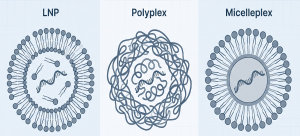
Lipid Nanoparticle (LNP) technology represents the most clinically advanced mRNA delivery platform, having enabled the first approved mRNA vaccines. LNPs are multicomponent systems typically composed of four lipid classes: an ionizable lipid, a helper phospholipid, cholesterol, and a polyethylene glycol (PEG)-lipid conjugate. The ionizable lipid serves as the functional core — it remains neutral at physiological pH during circulation, minimizing toxicity, but becomes protonated within the acidic endosomal compartment, triggering endosomal membrane disruption and cytosolic release of the mRNA payload.
The ionizable lipid design space has expanded dramatically in recent years. Machine learning-driven virtual screening now enables rapid evaluation of thousands of candidate lipid structures, narrowing the field to a handful of lead formulations before any bench work begins. This computational approach dramatically reduces the trial-and-error burden that historically characterized LNP development. Optimized formulations routinely achieve encapsulation efficiencies exceeding 90%, with narrow particle size distributions and polydispersity indices below 0.1 — attributes that are critical for reproducible biodistribution and translational consistency.
A key biological advantage of LNPs is their inherent tendency to accumulate in the liver following systemic administration, mediated by apolipoprotein E adsorption onto the particle surface. While this hepatic tropism has proven advantageous for liver-directed therapies, it also represents a limitation for applications requiring extrahepatic delivery. This has motivated intensive research into surface engineering strategies capable of redirecting LNPs toward other organs and cell types.
Polymer-Based Vectors: Tunable Alternatives
While LNPs dominate the clinical pipeline, Polymer based Vector platforms offer distinct advantages that make them compelling alternatives — particularly for applications requiring sustained or localized expression, or where lipid-related immunogenicity presents concerns. Cationic polymers such as poly(beta-amino ester)s (PBAEs), poly(amino-co-ester)s (PACEs), and modified polyethylenimine (PEI) variants condense mRNA through electrostatic interactions between their positively charged amine groups and the negatively charged phosphate backbone of the nucleic acid.
Polymer chemistry provides an exceptionally broad design space. Parameters including molecular weight, charge density, branching architecture, and hydrophilicity can be systematically tuned to optimize complexation efficiency, serum stability, and endosomal escape kinetics. Crucially, modern biodegradable polymer designs incorporate hydrolytically cleavable ester bonds that ensure controlled degradation in vivo, addressing the cytotoxicity concerns historically associated with first-generation non-degradable polycations.
Beyond their chemical versatility, polymer-based systems often demonstrate superior scalability compared to LNP formulations. The self-assembly process that drives polymer-mRNA complexation is generally robust to variations in mixing conditions, and polymer synthesis can be conducted using well-established polymerization chemistry amenable to good manufacturing practice production. These practical advantages have positioned polymer vectors as attractive platforms for applications ranging from cancer vaccines to localized regenerative therapies.
Polyplex: Electrostatic Self-Assembly for mRNA Delivery
Among polymer-based delivery formats, the Polyplex represents one of the most straightforward and extensively characterized architectures. Polyplexes form through spontaneous electrostatic self-assembly when cationic polymers are mixed with mRNA under controlled conditions. The resulting nanoparticles typically exhibit diameters below 200 nm with narrow polydispersity indices in the range of 0.12–0.16, a near-neutral zeta potential that confers “stealth” properties in circulation, and strong serum stability owing to the tight electrostatic binding between the polymer and nucleic acid.
The defining functional feature of polyplex technology is the “proton sponge effect” — a mechanism by which the polymer’s titratable amine groups buffer the endosomal compartment following cellular uptake, leading to osmotic swelling, endosomal rupture, and rapid release of intact mRNA into the cytoplasm. Empirical measurements have demonstrated endosomal escape kinetics of under 20 minutes, with consequent improvements in transfection efficiency of up to sevenfold relative to naked mRNA controls. Protein expression can be sustained for six days or longer, depending on the polymer chemistry and mRNA modification strategy employed.
Polyplex platforms have been applied across a wide therapeutic spectrum. In oncology, they serve as carriers for mRNA vaccines encoding tumor-associated antigens; in genetic medicine, they deliver therapeutic mRNA to replace deficient proteins; and in regenerative medicine, they facilitate localized delivery of transcription factors — one study demonstrating that Runx1 mRNA delivered via polyplex nanomicelles alleviated intervertebral disc degeneration in a rat model. The chemical versatility of the platform also permits surface functionalization with targeting ligands such as peptides and antibody fragments, enabling receptor-mediated cell-specific delivery.
Micelleplex: Core-Shell Architecture with Dual Loading Capacity
Polymer-based vector technology has evolved to include more architecturally sophisticated formats, among which the Micelleplex represents a particularly versatile design. Micelleplexes are formed from amphiphilic block copolymers that self-assemble in aqueous solution into core-shell nanostructures. The cationic polymer block condenses mRNA at the core-corona interface, while the hydrophilic outer shell — typically composed of PEG — provides steric stabilization and prolonged circulation half-life.
This core-shell architecture confers several functional advantages over simpler polyplex designs. The hydrophobic core can simultaneously accommodate small-molecule hydrophobic drugs, enabling co-delivery strategies in which a chemotherapeutic agent and an mRNA encoding a pro-apoptotic or immunostimulatory protein are administered together for synergistic effect. The hydrophilic corona can be readily functionalized with targeting ligands without disrupting mRNA complexation. Moreover, the structural integrity of micelleplexes in biological fluids often exceeds that of both polyplexes and lipoplexes, providing enhanced protection against nuclease-mediated degradation during systemic circulation.
The endosomal escape mechanism in micelleplexes similarly relies on the proton sponge effect, but the block copolymer architecture allows independent optimization of the mRNA-binding domain and the membrane-disrupting domain. This decoupling of functions is a significant design advantage: the polycation block can be tuned for optimal nucleic acid condensation without compromising endosomolytic activity, and vice versa. Micelleplex platforms have been applied in gene therapy, protein replacement, mRNA vaccine development, and regenerative medicine — including the delivery of transcription factors for in vitro and ex vivo cell reprogramming.
Targeted Delivery: Engineering Tissue and Cell Specificity
A critical frontier in mRNA delivery — irrespective of whether the carrier is lipid- or polymer-based — is achieving precise control over biodistribution. Targeted LNP Synthesis programs address this challenge through two complementary strategies. Passive targeting, exemplified by the Selective Organ Targeting (SORT) approach, modulates the lipid composition ratio to redirect nanoparticle accumulation from the default hepatic destination toward organs such as the spleen or lung. Active targeting, in contrast, involves covalent conjugation of targeting ligands — antibodies, peptides, or small molecules — to the nanoparticle surface, enabling receptor-mediated endocytosis by specific cell populations.
The therapeutic implications of targeted delivery are profound. Ligand-functionalized LNPs directed against CD11c or DEC-205 can deliver tumor antigen-encoding mRNA specifically to dendritic cells, enhancing antigen presentation and anti-tumor immune responses. CD3- or CD4-targeted LNPs can deliver mRNA constructs that enable transient in vivo chimeric antigen receptor (CAR) expression in T cells. Mannose receptor-targeted carriers can deliver anti-inflammatory siRNA to macrophages for autoimmune disease applications. Across polymer-based platforms, similar targeting strategies are achievable through end-group functionalization of the hydrophilic polymer block.
The development of a targeted delivery system requires careful optimization of multiple interdependent parameters: ligand density, linker chemistry, particle size, and surface charge all influence targeting efficiency and must be evaluated in relevant biological models. Systematic characterization workflows that integrate physicochemical analysis with functional cell-based assays are essential for identifying formulations that balance targeting specificity with manufacturability and stability.
Practical Considerations for Preclinical Development
For research teams advancing mRNA therapeutic candidates, the selection of an appropriate delivery platform represents one of the earliest and most consequential decisions in the preclinical development pathway. Key considerations include the intended route of administration (systemic versus local), the target cell type and organ, the required duration of protein expression, the immunogenicity profile of the carrier, and the scalability of the manufacturing process.
The complexity of these interdependent variables means that platform selection is rarely straightforward. A formulation that performs well in vitro using immortalized cell lines may exhibit markedly different behavior in vivo due to protein corona formation, differential opsonization, and complex hemodynamic factors. Bridging this in vitro–in vivo correlation gap requires integrated characterization workflows that go beyond simple transfection efficiency measurements to encompass immunogenicity profiling, biodistribution analysis, and stability assessment under physiologically relevant conditions.
Partnering with an experienced preclinical contract research organization (CRO) can substantially de-risk this process. Creative Biolabs offers integrated mRNA delivery platform development services spanning LNP formulation, polymer synthesis, polyplex and micelleplex engineering, and targeted delivery optimization. Each program follows a quality-by-design framework, with rigorous characterization at every stage — from computational lipid screening and microfluidic formulation through in vitro functional testing and predictive in vivo modeling. Flexible engagement models accommodate programs at all stages, from early feasibility assessment through IND-enabling preclinical studies.
Conclusion
The rapid evolution of non-viral mRNA delivery technologies — from clinically validated Lipid Nanoparticle platforms to chemically versatile Polymer based Vector systems and architecturally sophisticated Micelleplex designs — has dramatically expanded the therapeutic reach of mRNA-based medicines. Each platform class offers distinct advantages suited to specific therapeutic contexts, and the field continues to advance toward ever more precise control over tissue and cell-type specificity through innovations such as targeted LNP synthesis.
For research teams navigating this complex landscape, the key to success lies in systematic platform evaluation guided by clear therapeutic objectives, rigorous characterization standards, and access to specialized formulation and analytical expertise. As the mRNA therapeutic pipeline continues to mature across oncology, genetic medicine, and beyond, tailored preclinical development support will remain essential for translating promising nucleic acid constructs into robust, developable drug candidates.
FAQ
Q: What are the key differences between lipid nanoparticle and polymer-based mRNA delivery systems?
A: Lipid Nanoparticle systems are multicomponent lipid assemblies whose functionality is driven primarily by an ionizable lipid that enables endosomal escape. Tttps://mrna.creative-biolabs.comhey represent the most clinically advanced platform. Polymer based Vector systems use cationic polymers that condense mRNA through electrostatic interactions and achieve endosomal escape via the proton sponge effect. Polymers generally offer greater chemical tunability and may be more readily scalable, while LNPs benefit from extensive clinical validation.
Q: How does a polyplex differ from a micelleplex?
A: A Polyplex forms through direct electrostatic complexation between cationic polymers and mRNA, producing nanoparticles with diameters typically below 200 nm. A Micelleplex adopts a more sophisticated core-shell architecture: amphiphilic block copolymers self-assemble such that the cationic block binds mRNA at the core-corona interface while a hydrophilic PEG shell provides steric stabilization. Micelleplexes additionally offer dual loading capacity — the hydrophobic core can co-encapsulate small-molecule drugs.
Q: What strategies are used to achieve tissue-specific mRNA delivery?
A: Two complementary strategies are commonly employed. Passive targeting — exemplified by the SORT methodology used in Targeted LNP Synthesis — adjusts lipid composition ratios to shift biodistribution away from the default hepatic accumulation pattern. Active targeting involves covalently conjugating ligands (antibodies, peptides, or small molecules) to the nanoparticle surface to engage specific cell-surface receptors, enabling receptor-mediated endocytosis by the desired cell population.