
Introduction
The messenger RNA (mRNA) therapeutics field has undergone a remarkable transformation, propelled from a niche research area into a cornerstone of modern medicine by the global deployment of mRNA-based COVID-19 vaccines. With over two dozen mRNA therapeutic candidates now in clinical development spanning infectious disease, oncology, and rare genetic disorders, the need for rigorous analytical characterization and advanced delivery technologies has never been greater. Two interconnected pillars underpin the successful translation of mRNA therapeutics: comprehensive characterization of the mRNA-lipid nanoparticle (LNP) drug product to ensure consistent quality, safety, and efficacy; and innovative mRNA engineering strategies, including non-viral cell reprogramming, that expand the therapeutic reach of this versatile modality.
This article examines the critical characterization workflows that define mRNA-LNP quality — from Critical Quality Attribute Characterization to advanced colloidal structure analysis and stability evaluation — and explores how mRNA-based cell reprogramming, particularly T cell engineering, is opening new frontiers in regenerative medicine and immunotherapy.
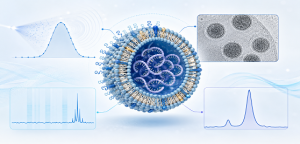
Critical Quality Attributes — The Foundation of mRNA Therapeutic Development
Regulatory agencies including the FDA and EMA have established frameworks requiring comprehensive characterization of mRNA-LNP drug products, guided by the identification and control of critical quality attributes (CQAs). These are the physical, chemical, biological, and microbiological properties that must be maintained within defined limits to ensure product quality. For mRNA-LNP therapeutics, CQAs encompass both the LNP delivery vehicle and the mRNA cargo, and their reliable measurement has become a prerequisite for successful IND submissions and clinical advancement.
A robust Critical Quality Attribute Characterization program addresses three interconnected categories. Physicochemical CQAs for the LNP include particle size (hydrodynamic diameter), polydispersity index (PDI), zeta potential, and morphology — each measured through complementary orthogonal techniques such as dynamic light scattering (DLS), nanoparticle tracking analysis (NTA), and cryo-electron microscopy (cryo-TEM). Functional and purity CQAs for the mRNA cargo include encapsulation efficiency (EE), mRNA integrity (percentage of full-length transcript), capping efficiency, poly(A) tail length, and the quantification of immunogenic impurities — particularly double-stranded RNA (dsRNA), which can trigger innate immune activation if not adequately controlled.
Bioperformance CQAs bridge the gap between analytical characterization and clinical predictivity. In vitro drug release kinetics, assessed through continuous flow systems or physiological dialysis models, provide a window into how the LNP will retain and release its mRNA payload in vivo. Cytotoxicity assays on target-relevant cell lines de-risk dose-limiting toxicity before animal studies begin. Together, these CQA measurements form an integrated quality profile that supports formulation optimization, batch-to-batch comparability, and regulatory documentation — all essential for advancing mRNA candidates from discovery through clinical phases.
Beyond Basic Particle Sizing — Colloidal Structure Co-Existence Analysis
While routine DLS measurements provide a rapid assessment of particle size and homogeneity, they offer limited insight into the internal architecture and structural heterogeneity of LNP formulations. A narrow PDI from DLS can mask the presence of co-existing colloidal structures — additional populations of liposomes, micelles, multilamellar vesicles, or lipid aggregates — that compromise drug loading, alter release kinetics, and reduce batch consistency. This is where advanced structural characterization becomes indispensable.
Addition Colloidal Structure Co-existence Characterization employs a suite of high-resolution analytical techniques to probe the internal organization of LNP formulations. Small-angle X-ray scattering (SAXS) resolves sub-nanoscale internal architecture — revealing lamellar spacing, core-shell morphology, and the presence of non-lamellar phases — without the sample preparation artifacts common to electron microscopy. Field-flow fractionation coupled with multi-angle light scattering (FFF-MALS) separates LNP populations by size before characterization, enabling the detection and quantification of minor colloidal species that would otherwise remain hidden within bulk measurements.
Differential scanning calorimetry (DSC) complements scattering techniques by probing thermal behavior, identifying phase transitions such as gel-to-liquid crystalline transitions that reflect lipid membrane organization and stability. Liquid chromatography with evaporative light scattering detection (LC-ELSD) provides quantitative lipid composition analysis, essential for verifying that each LNP component is present at the intended molar ratio. Together, these orthogonal methods generate a comprehensive structural fingerprint that correlates internal architecture with functional performance, enabling data-driven formulation optimization and the establishment of meaningful QC metrics for manufacturing scale-up.
Physicochemical Stability — Ensuring Functional Longevity from Bench to Patient
Even a perfectly characterized LNP formulation is of limited value if it cannot maintain its structural and functional integrity through storage, shipping, and administration. LNP instability manifests through multiple mechanisms: aggregation driven by colloidal instability, mRNA leakage caused by lipid membrane disruption, chemical degradation of lipid components through oxidation and hydrolysis, and phase transitions that alter the internal liquid crystalline organization essential for endosomal escape and cytosolic mRNA delivery.
Physicochemical Stability Evaluation takes a Stability-by-Design approach that goes beyond simple storage monitoring. Stress testing under tailored conditions — accelerated temperature, freeze-thaw cycling, mechanical shear, and pH excursions — reveals the failure modes most relevant to each formulation’s intended clinical use. Multi-modal characterization combining DLS for size and aggregation monitoring, ultra-high performance liquid chromatography-tandem mass spectrometry (UPLC-MS/MS) for lipid degradation product quantification, and capillary gel electrophoresis for mRNA integrity assessment generates a 360-degree stability profile.
Critically, physicochemical stability data are linked to functional performance through in vitro or ex vivo protein expression assays on stressed samples. This ensures that stability metrics are not merely numbers on a certificate of analysis but are directly predictive of therapeutic potency. Advanced kinetic modeling — applying Arrhenius kinetics to chemical degradation rates — enables temperature-dependent shelf-life prediction, de-risking cold chain logistics and supporting CMC submissions with quantitative stability data.
mRNA-Based Cell Reprogramming — A Non-Integrating Paradigm for Regenerative Medicine
The generation of induced pluripotent stem cells (iPSCs) through the exogenous expression of transcription factors — first demonstrated by Yamanaka using retroviral delivery of OCT4, SOX2, KLF4, and c-MYC (OSKM) — opened transformative possibilities for disease modeling, drug screening, and regenerative medicine. However, the use of integrating viral vectors carries inherent risks, including insertional mutagenesis and residual transgene expression, which are particularly concerning given that two of the Yamanaka factors (KLF4 and c-MYC) are known oncogenes.
mRNA-based reprogramming addresses these safety concerns by delivering reprogramming factors as transient, cytoplasmically translated transcripts that never enter the nucleus and are rapidly degraded. This footprint-free approach eliminates the risk of genomic integration entirely. Custom mRNA based Cell Reprogramming services leverage optimized mRNA constructs incorporating nucleoside modifications such as pseudouridine and 5-methylcytidine — innovations pioneered by Kariko and Weissman that enhance mRNA stability and translation while suppressing innate immune recognition — to achieve efficient, reproducible reprogramming across diverse somatic cell types including fibroblasts, peripheral blood mononuclear cells (PBMCs), and immune cell populations.
The technology extends beyond iPSC generation to encompass direct lineage conversion — reprogramming one somatic cell type into another without passing through a pluripotent intermediate — and immune cell engineering for dendritic cell, natural killer (NK) cell, and B cell applications. The flexibility to tailor factor cocktails, stoichiometry, and delivery modalities (LNP formulations or electroporation) to each specific cell type and therapeutic goal makes mRNA-based reprogramming a versatile platform for both research and clinical-grade cell product manufacturing.
mRNA-Based T Cell Reprogramming — The Next Frontier in Immunotherapy
Chimeric antigen receptor (CAR) T cell therapy has achieved remarkable clinical success in hematological malignancies, yet the current autologous manufacturing paradigm — requiring leukapheresis, ex vivo viral transduction, expansion, and weeks-long processing — imposes significant cost, time, and accessibility barriers. Per-patient treatment costs routinely exceed $400,000, and approximately 5–10% of manufacturing runs fail, leaving patients with rapidly progressive disease without viable treatment options.
mRNA based T Cell Reprogramming offers a fundamentally different approach. By delivering in vitro-transcribed mRNA encoding CAR or T cell receptor (TCR) constructs — either ex vivo via electroporation or in vivo via targeted LNP or polymer nanocarrier delivery — T cells can be transiently reprogrammed to express tumor-targeting receptors without genomic modification. Parayath and colleagues demonstrated that polymer nanocarriers functionalized with T-cell-targeting antibodies could deliver CAR-encoding mRNA to circulating T cells in vivo, generating functional CAR-T cells capable of mediating antitumor responses comparable to ex vivo-engineered cells.
The transient nature of mRNA expression — typically lasting several days — is not a limitation but a design feature for many applications. In solid tumor settings, where permanent CAR expression risks on-target/off-tumor toxicity, transient expression allows dose-controllable therapeutic windows. In autoimmune disease and fibrosis, the self-limiting expression profile prevents permanent immune cell ablation. Recent work by Kitte and colleagues demonstrated that optimized CAR-mRNA constructs incorporating modified nucleosides such as N1-methylpseudouridine significantly enhanced CAR expression levels and cytotoxicity in T cells derived from acute myeloid leukemia patients, underscoring the importance of mRNA chemistry optimization in achieving therapeutic potency.
Future Outlook
The convergence of advanced mRNA-LNP characterization capabilities with non-viral cell reprogramming technologies is reshaping the therapeutic landscape. As analytical techniques continue to mature — driven by regulatory harmonization efforts from organizations such as the United States Pharmacopeia (USP) and the European Pharmacopoeia — the ability to define, measure, and control CQAs with increasing precision will accelerate the translation of mRNA therapeutics from concept to clinic.
Simultaneously, the evolution of in vivo mRNA delivery technologies — including T-cell-targeted LNPs, biodegradable polymer platforms, and self-amplifying RNA (saRNA) constructs — promises to transform cell therapy from a complex, centralized manufacturing process into an off-the-shelf, injectable therapeutic modality. The integration of these characterization and engineering capabilities within a single development framework represents the most efficient path to safe, effective, and accessible mRNA-based medicines.
Conclusion
The therapeutic potential of mRNA extends far beyond prophylactic vaccination. From comprehensive CQA characterization that ensures product quality and regulatory compliance, to advanced colloidal structure and stability analyses that optimize formulation performance, to mRNA-based reprogramming strategies that enable footprint-free generation of iPSCs and transiently engineered CAR-T cells — the mRNA toolbox is expanding rapidly across the drug development continuum.
For research teams navigating this complex landscape, access to integrated expertise spanning analytical characterization, formulation development, and mRNA engineering can substantially reduce technical risk and accelerate program timelines. Creative Biolabs offers comprehensive mRNA service platforms — including CQA characterization, colloidal structure analysis, stability evaluation, and cell reprogramming — tailored to the specific requirements of each development program. To explore how these capabilities can support your mRNA therapeutic research, contact our scientific team to discuss project-specific solutions.
FAQ
Q: What are the most critical CQAs for an mRNA-LNP drug product?
A: Key CQAs span three categories: physicochemical (particle size, PDI, zeta potential, morphology), functional/purity (encapsulation efficiency, mRNA integrity, capping efficiency, dsRNA content), and bioperformance (in vitro release kinetics, cytotoxicity). The specific CQA panel and acceptance criteria depend on the therapeutic indication and development phase, but comprehensive orthogonal characterization across all three categories is essential for regulatory submissions.
Q: Why is colloidal structure co-existence analysis important beyond standard DLS measurements?
A: DLS provides ensemble-averaged size information but cannot distinguish between morphologically distinct colloidal populations — such as properly formed LNPs coexisting with empty liposomes, micelles, or aggregated lipid species. These additional structures can affect drug loading, release kinetics, and immunogenicity. Advanced techniques including SAXS, FFF-MALS, and cryo-TEM resolve these populations and their internal architecture, providing the structural understanding needed for rational formulation optimization.
Q: How does mRNA-based reprogramming differ from viral vector-based iPSC generation?
A: mRNA reprogramming delivers transcription factors as transient, cytoplasmically translated transcripts that never integrate into the genome. This eliminates insertional mutagenesis risk — particularly important given that reprogramming factors KLF4 and c-MYC are oncogenes — and leaves no residual vector footprint. mRNA is naturally degraded within days, yielding truly footprint-free iPSCs suitable for clinical applications.
Q: Can mRNA-based CAR-T cell engineering achieve comparable efficacy to viral vector approaches?
A: For indications requiring transient CAR expression — such as solid tumors where permanent CAR expression risks toxicity, or autoimmune disease where permanent immune ablation is undesirable — mRNA-based approaches offer distinct advantages in safety and dose controllability. While transient expression means repeated dosing may be needed for sustained effect, the elimination of ex vivo manufacturing complexity and genomic integration risk makes mRNA-based approaches particularly attractive for next-generation cell therapy development.
Q: What stability challenges are unique to mRNA-LNP formulations?
A: mRNA-LNP formulations face multiple stability challenges: colloidal instability leading to aggregation, lipid degradation through oxidation and hydrolysis, mRNA leakage from disrupted lipid membranes, and phase transitions in the internal lipid organization that compromise endosomal escape. A comprehensive stability program must address all these mechanisms through multi-modal characterization linked to functional potency assays, rather than relying on any single stability metric.
References
Inagaki, Masahito. “Cell reprogramming and differentiation utilizing messenger RNA for regenerative medicine.” Journal of developmental biology 12.1 (2023): 1.